


AirGreen™
Interview | Delivering High Heat Resistance and Low Odor Without Coal Tar: A Next-Generation Taphole Clay Setting a New Standard for Blast Furnace Operations
AirGreen™
Team Member
- Hirano, Manager, Ironmaking Monolithic Refractories Group, Monolithic Refractories Technology Department (Krosaki Harima Corporation)
- Miyajima, Manager, Fundamental Technology Research Center, Technical Research Institute (Krosaki Harima Corporation)
- Kamino, Assistant manager, Refractories Global Sales Division Nagoya Branch (Krosaki Harima Corporation)
- Mr. Nishio, Assistant manager, Blast Furnace Plant, Ironmaking Division, Nagoya Works (Nippon Steel Corporation)
At Nippon Steel Corporation Nagoya Works, which places importance on improving the working environment in blast furnace operations, resin-based taphole clay using resin binders was employed until the year 2000.
However, compared to tar-based taphole clay that uses coal tar as a binder, resin-based taphole clay presented challenges such as shorter cast duration and insufficient taphole length. To address these issues, since 2000, a tar-resin mixed binder developed by Krosaki Harima has been adopted for tar-resin type taphole clay.
AirGreen™ is a strategic product developed to overcome the limitations of tar-resin type taphole clay.
Toward a Safe and Odor-Free Work Environment
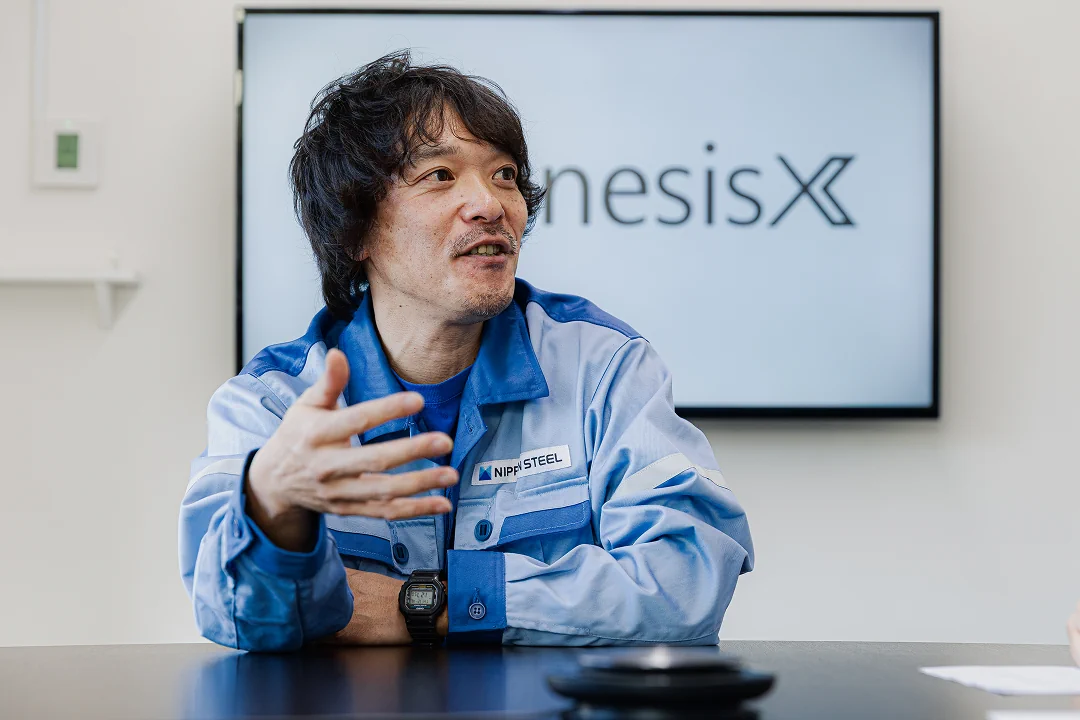
What made you decide to try AirGreen™?
Mr. Nishio (Nippon Steel Corp.):
Since I joined the company, we have been using tar-resin type taphole clay, but the strong odor was the biggest issue. In addition, I was aware that using tar was not good for human health, and considering the social context, I felt improvement was necessary.
A taphole clay without odor is a significant advantage for people working on-site, so I was eager to introduce it.
Furthermore, I felt that tar-resin type taphole clay had its limitations, and to overcome them, a new type of taphole clay was needed. I had always held this belief.
In fact, I started thinking about this more than 10 years ago. At that time, experienced colleagues often said, “Strong odors are not good” and “We should avoid anything that affects health.” So, I had always wanted to make improvements someday.
Could you share the story behind AirGreen™’s development?
Hirano (Krosaki Harima Corp.)
AirGreen™ is a taphole clay designed to minimize the use of harmful raw materials, including coal tar, which is a carcinogenic substance. Our goal was to provide a material free from hazardous components—safe for both people and the environment—so that customers can use it with confidence.
Overcoming Two Setbacks Through Engineering–Sales Collaboration
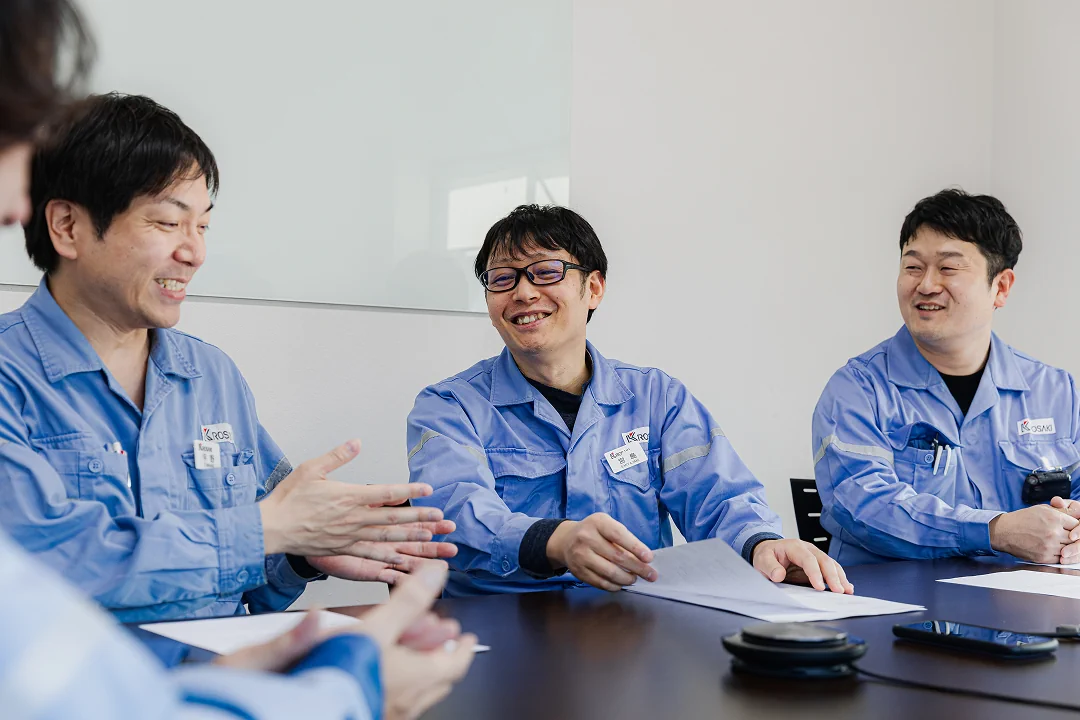
Could you tell us about the technical features of AirGreen™?
Miyajima (Krosaki Harima Corp.):
We began development in the latter half of 2018. The first-generation product faced manufacturing issues before we could proceed to large-scale testing, and we had to abandon the project. We then rushed to develop a second generation, but that also failed. However, these challenges helped us identify the root causes, and by applying those insights to the third generation, we successfully developed AirGreen™.
The phenolic resin used as a binder in AirGreen™ is a special grade with low molecular weight and minimal free phenol. Compared to conventional phenolic resins, it has a thermal decomposition temperature more than 80℃ higher and produces almost no odor.
In addition, the solvents used for liquefaction were carefully selected from multiple options to ensure low toxicity, odor-free properties, and suitability for taphole clay. In terms of material characteristics, we aimed to achieve low odor and low toxicity while maintaining both high-temperature stability and plasticity.
I believe it is essential to pursue sustainable development with consideration for the environment. Going forward, we plan to continue developing taphole clay materials that are even more environmentally friendly.
However, introducing new materials alone is not enough. It is important to balance cost and investment in facilities so as not to burden the site. Making operations easier and reducing health risks will remain major themes in the future.
How has the sales team been involved?
Kamino (Krosaki Harima Corp.):
As we advanced our sales activities, I began to feel that “this could become a product that delivers great value.” In particular, when I visited the taphole clay plant during the summer and observed the manufacturing process and even handled the product myself, I became convinced that “this will help improve the worksite environment.”
Furthermore, when customers commented, “It doesn’t have any odor,” I truly realized the value of AirGreen™ and strongly felt the significance of promoting this product as a sales representative.
From a sales perspective, I believe it is important to provide thorough feedback on customer opinions and user experience and work closely with the development team to drive improvements.
In fact, I feel that we were able to collaborate with customers as true partners in development. There were times when earlier tests did not produce the desired results, but subsequent trials moved in the right direction, and we felt confident. Being able to work together with customers in this way is extremely important.
Going forward, we aim to continue engaging in dialogue with customers and evolve the product into something easier to use and more environmentally friendly. I believe the role of sales is not limited to simply selling products, but to contributing to solving customer challenges.
AirGreen™ in Action: Changing the Worksite Environment
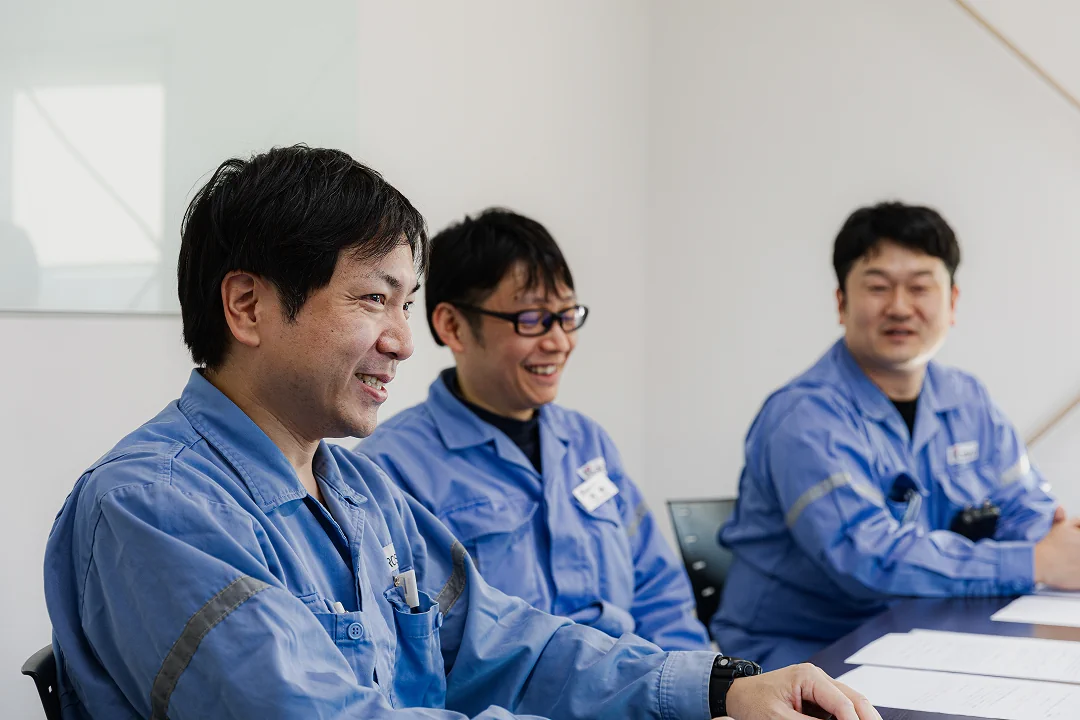
Could you tell us about the benefits of introducing AirGreen™?
Mr. Nishio (Nippon Steel Corp.):
The biggest benefit is that the odor has almost completely disappeared. It’s truly at a level where you don’t notice any smell, which is a huge advantage for workers on-site.
With less odor, the smell no longer clings to work clothes. In the past, people would sometimes point out after work, “You smell,” but that no longer happens, which is a great relief. Even if you don’t notice it yourself, when others mention it, you can’t help but feel concerned.
Another major improvement is that the product has finally reached a stable and reliable form for practical use. Going forward, we kindly ask you to maintain this achievement and continue working to further enhance its performance.
What are your expectations for the future direction and for Krosaki Harima?
Mr. Nishio (Nippon Steel Corp.):
I believe it is not realistic to make major changes to the current production facilities. Therefore, I feel it is important to create better products based on the existing equipment.
Rather than saying, “It can be done if we invest in new facilities,” I think it is crucial to deliver added value under the given conditions—something that only Krosaki Harima can achieve. That way, there will be a clear reason why it has to be Krosaki Harima and not another company, and personally, I appreciate that kind of approach.
That is why I feel the development of AirGreen™ has been an initiative where we could move forward together, moving in the same direction.
Beyond Quality: A Partnership Built on Trust and Open Dialogue
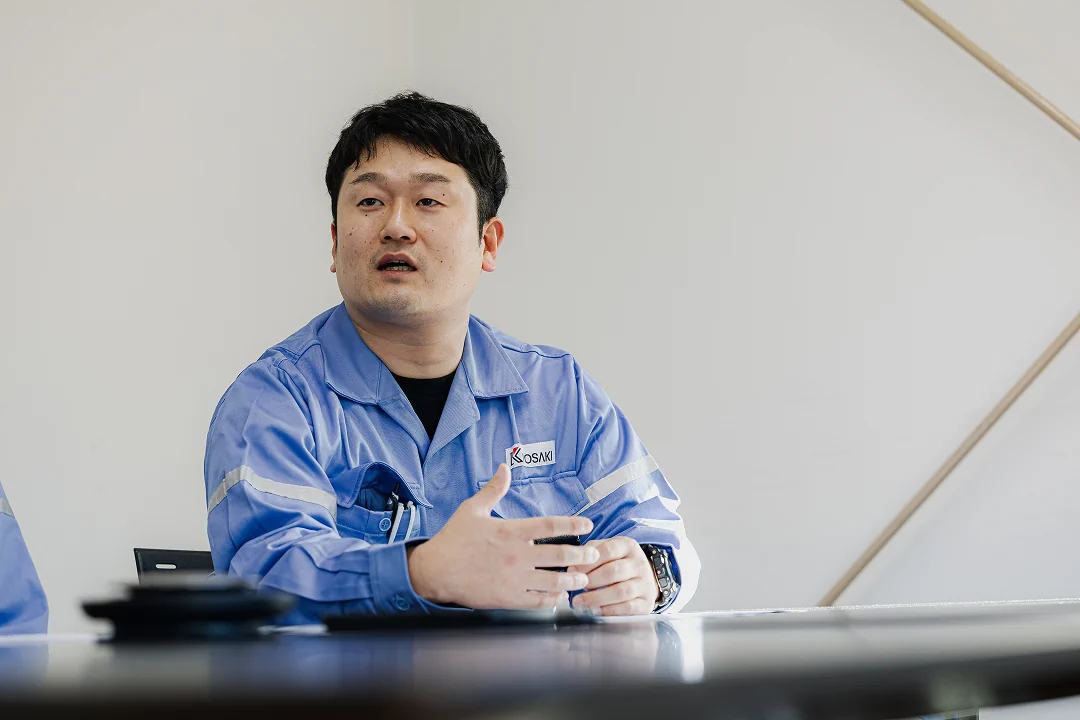
“Why have you chosen Krosaki Harima’s products for so many years?
Mr. Nishio (Nippon Steel Corp.):
The reason we choose Krosaki Harima’s products is not just because of their excellent quality. What we value most is the relationship where we can speak openly with you, rather than having overly formal interactions.
Sometimes we have to be quite demanding, but you always respond sincerely. If there’s an issue, you reset and quickly come back with a new proposal. That speed and flexibility are truly appreciated.
Another key point is that you visit the site and see the situation firsthand. You provide concrete suggestions like, “Given these conditions, this approach would work better,” which gives us confidence to rely on you. This responsiveness and strong communication are the biggest reasons we continue to choose Krosaki Harima.
Of course, the quality is excellent, but more than that, we highly value your commitment to listening to customers. We genuinely feel that choosing Krosaki Harima was the right decision.
What are your aspirations going forward?”
Hirano (Krosaki Harima Corp.):
We truly appreciate that Nippon Steel has such deep knowledge of taphole clay, which allows us to engage in meaningful discussions based on that expertise. When improving products, sharing the background and objectives behind introducing new technologies is extremely important.
We feel that, when working with Nippon Steel on quality improvements and new product testing, we are always aligned and moving in the same direction. As a company, we find this collaborative relationship very reassuring.
Going forward, we would like to continue monitoring daily conditions and, together, examine which materials are best suited to changes in taphole clay usage.
In addition, we aim to propose new technologies developed at our research center in ways that fit the customer’s operating conditions, and to advance improvements and development through ongoing discussions.
We sincerely hope to continue these efforts, and we are honored that our materials have been chosen time and again.
Kamino (Krosaki Harima Corp.):
I believe it is essential to stay close to the field and keep improving while learning. We want to reflect the knowledge gained on-site in our products to make them even better.
For that reason, we will continue working together with our customers. We appreciate your continued support.
