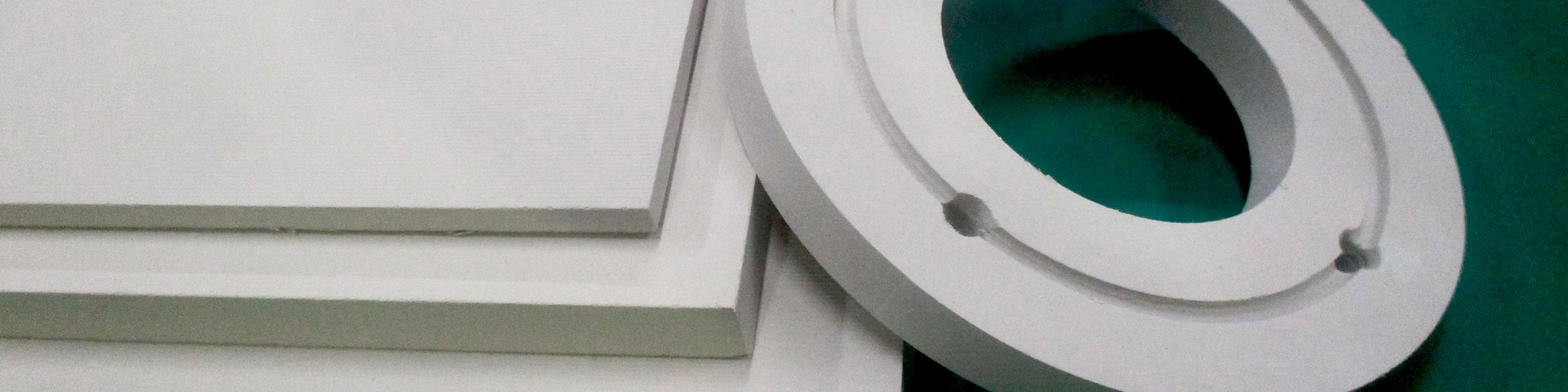
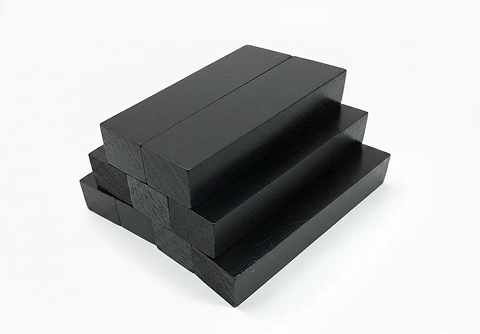
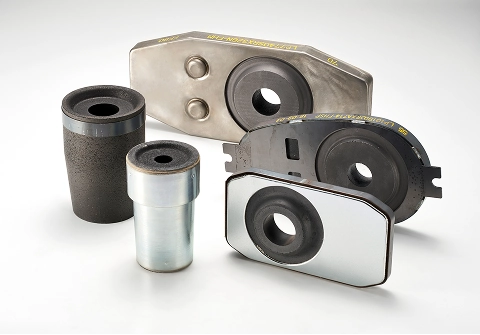
KROTECT™ is an insulation material that has very low thermal conductivity and demonstrates excellent thermal insulation performance. It is used in steel manufacturing and industrial furnaces, as well as in household fuel cells (ENE-FARM).
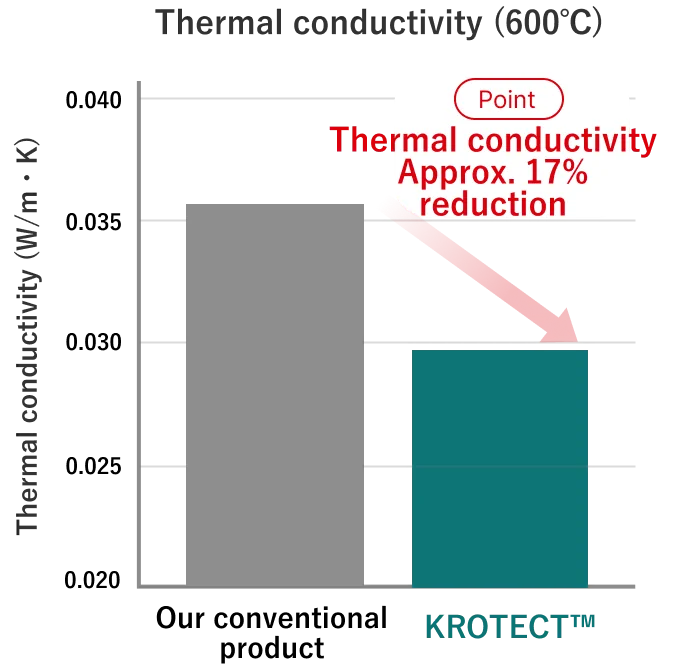
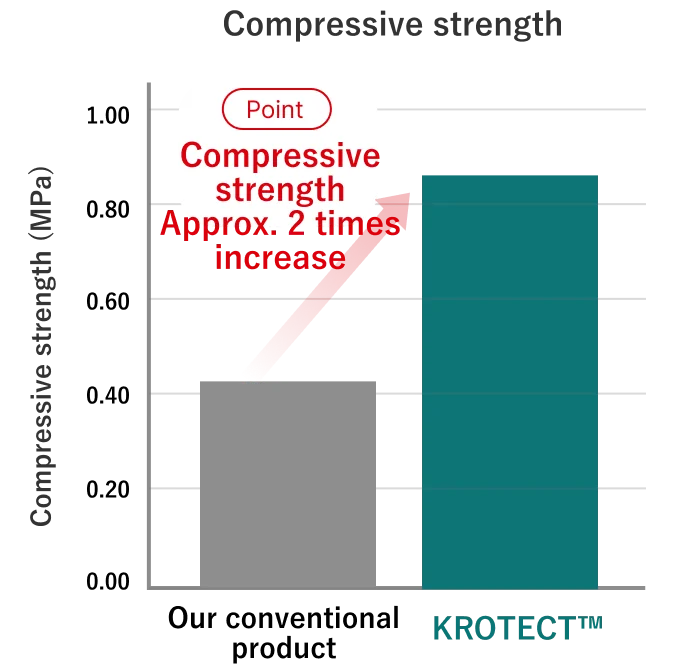
KROTECT™ has the characteristics of lower thermal conductivity and higher strength than conventional materials.
Comparison of physical properties between our conventional product and KROTECT™
*In the case of KROTECTTM (Low thermal conductivity type)
*These values were measured by our company, and do not guarantee specific property values.
1Conserving energy in steel manufacturing processes
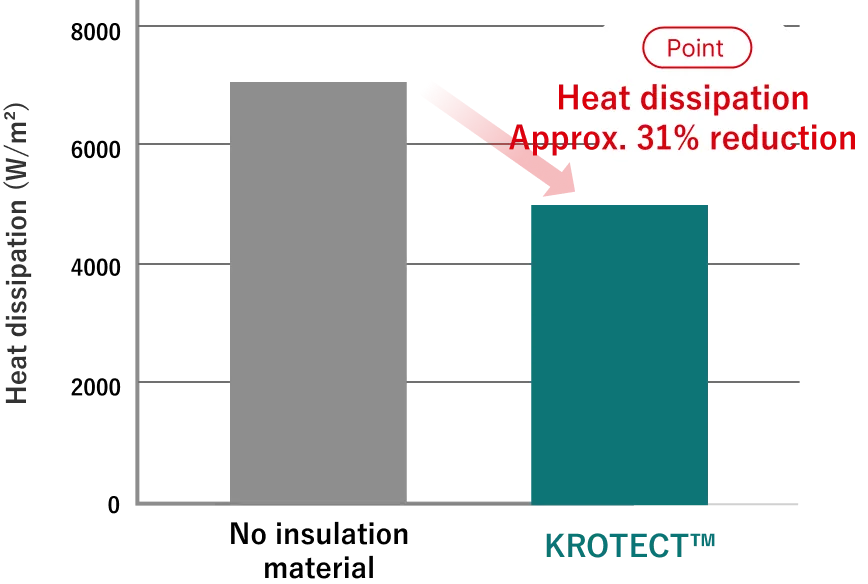
KROTECT™ can reduce energy loss by improving insulation performance, and thereby decreasing heat released to the outside from equipment such as furnaces.
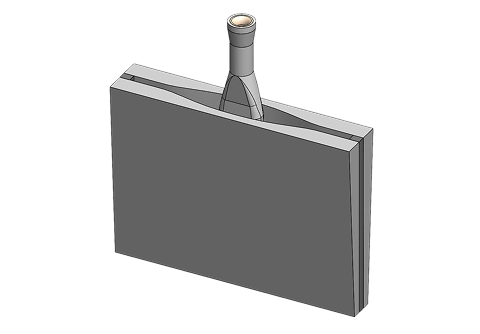
Example of KROTECT™ applied to a molten steel pot
*KROTECTTM (Low thermal conductivity type) 3mm is applied.
*Please note that the values obtained from this simulation are all predictions, and are not guaranteed to be effective.
2Expansion of installation locations through miniaturization and weight reduction of fuel cells
KROTECT™ can make fuel cell products smaller and lighter because it can maintain conventional insulation performance while reducing the thickness of the insulation material.
Conceptual illustration of size/weight reduction of fuel cell hot module
By miniaturizing fuel cells, they can be installed even in narrow spaces, expanding the options for installation locations.
Additionally, weight reduction leads to improved workability and reduced labor during installation and maintenance, as well as lower costs associated with downsizing.
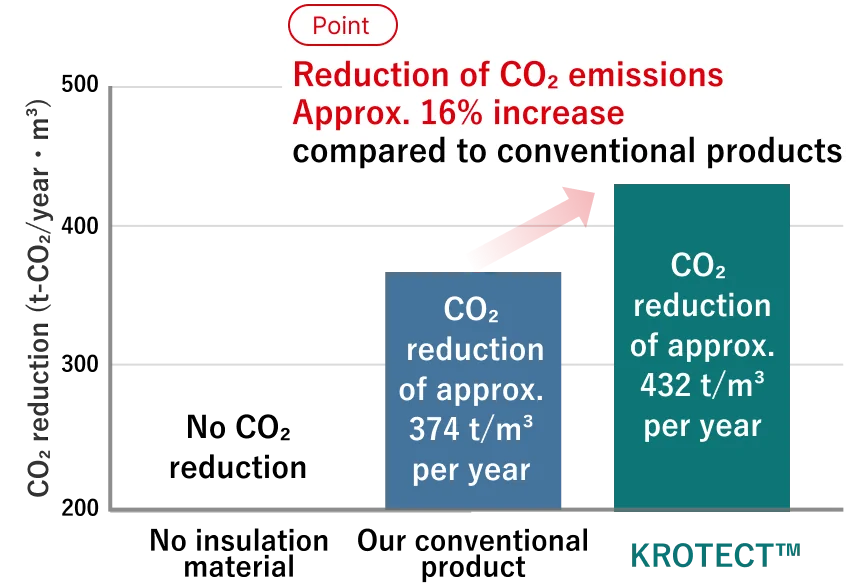
We estimated of CO₂ reduction based on the amount of heat dissipation in an industrial furnace operating 24 hours a day, 365 days a year using fossil fuels, comparing three scenarios: No insulation, Using conventional products, KROTECT™.
As a result, we found that by using KROTECT™ with its high insulation performance, we can reduce CO₂ emissions by approx. 58 tons per year compared to conventional products.
Comparison of CO₂ emission reduction between our conventional product and KROTECT™
We obtained calculation results showing that by using KROTECT™ with its high insulation performance, CO₂ emissions can be reduced by approx. 58t per year compared to conventional products.*
* As our own calculation, we estimated the CO₂ reduction amount based on factors such as heat dissipation in each case (no insulation, using conventional products, and using KROTECTTM (Low thermal conductivity type)) assuming industrial furnaces operating 24 hours a day, 365 days a year, with fossil fuel.
This site uses cookies to improve user convenience, analyze site operation, and conduct marketing activities. If you continue to browse this site, we will assume that you have agreed to our use of cookies. For more information, please see our cookie policy on this site.