KROTECT™
Interview | Developing materials with high thermal insulation performance for the era of decarbonization
KROTECT™
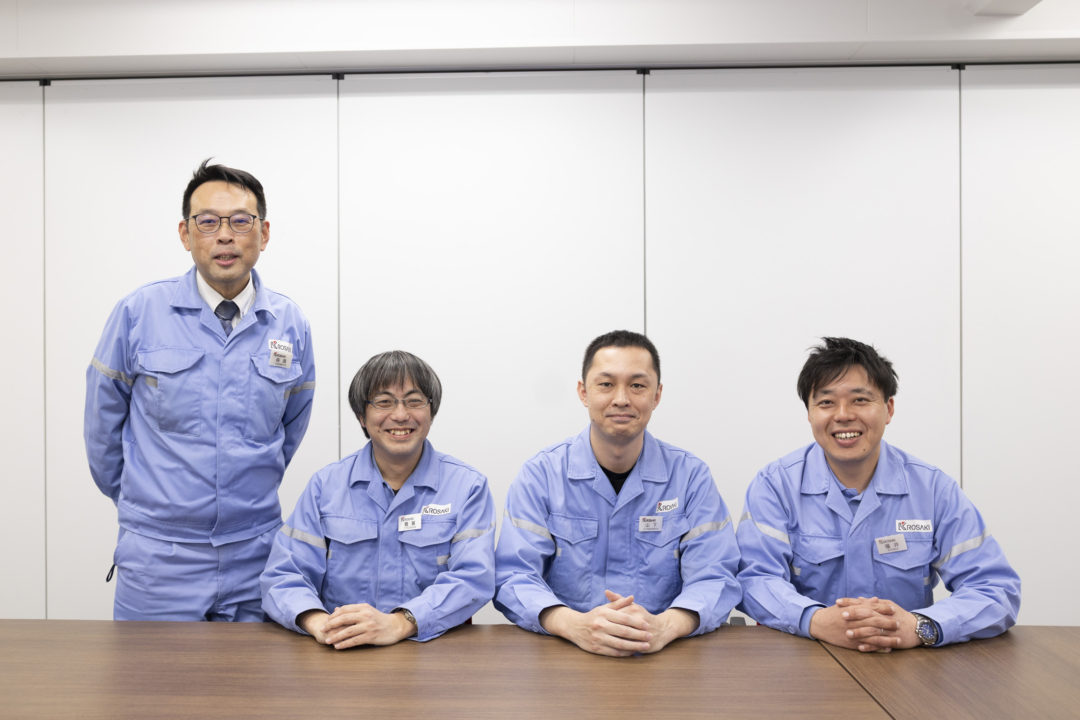
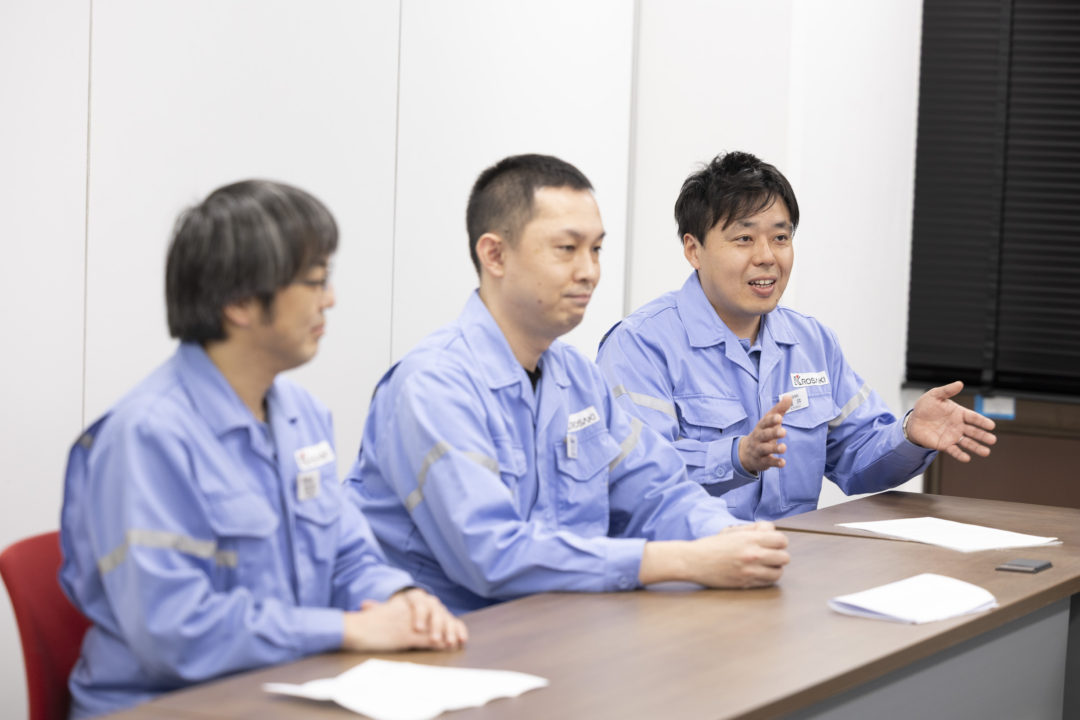
Team Member
- Morikiyo, Head of the Quality Engineering Group, Thermal Ceramics Department, Ceramics Division
- Tsuruga, a member of the Quality Engineering Group, Thermal Ceramics Department, Ceramics Division
- Yamashita, a member of the Quality Engineering Group, Thermal Ceramics Department, Ceramics Division
- Fukui, a member of the Production Engineering Group, Thermal Ceramics Department, Ceramics Division
Low thermal conductivity and low cost insulation materials were required
What is the background behind the development of KROTECT™ ?
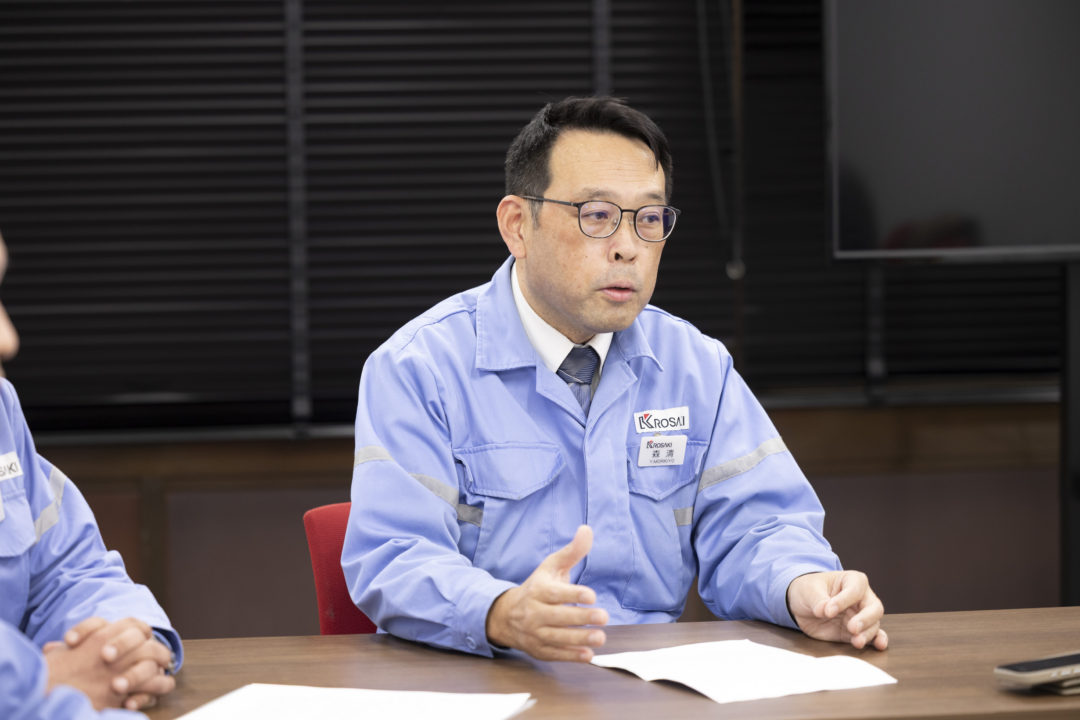
Morikiyo:
My name is Morikiyo, and I am head of the group in charge of material development in the Quality Technology Group of the Thermal Ceramics Department. For many years, we have been importing, processing, and selling Microporous insulation materials based on fumed silica. As the shift to a decarbonized society has accelerated both domestically and internationally over the past few years, however, the demand for customization of the material properties of insulation materials has increased.
The need for insulation materials was particularly acute in the market for residential fuel cells. Low thermal conductivity and low-cost thermal insulation materials were needed in order to expand the use of fuel cells by reducing their size, reducing the cost of equipment, and increasing their efficiency. To adeptly and quickly respond to that need, we decided that in-house manufacturing was essential, and we launched a project to develop an integrated manufacturing line that would enable us to supply products quickly and inexpensively.
Meeting the need for a smaller size and lower cost while also improving energy efficiency
What specific needs have your customers come to you with?
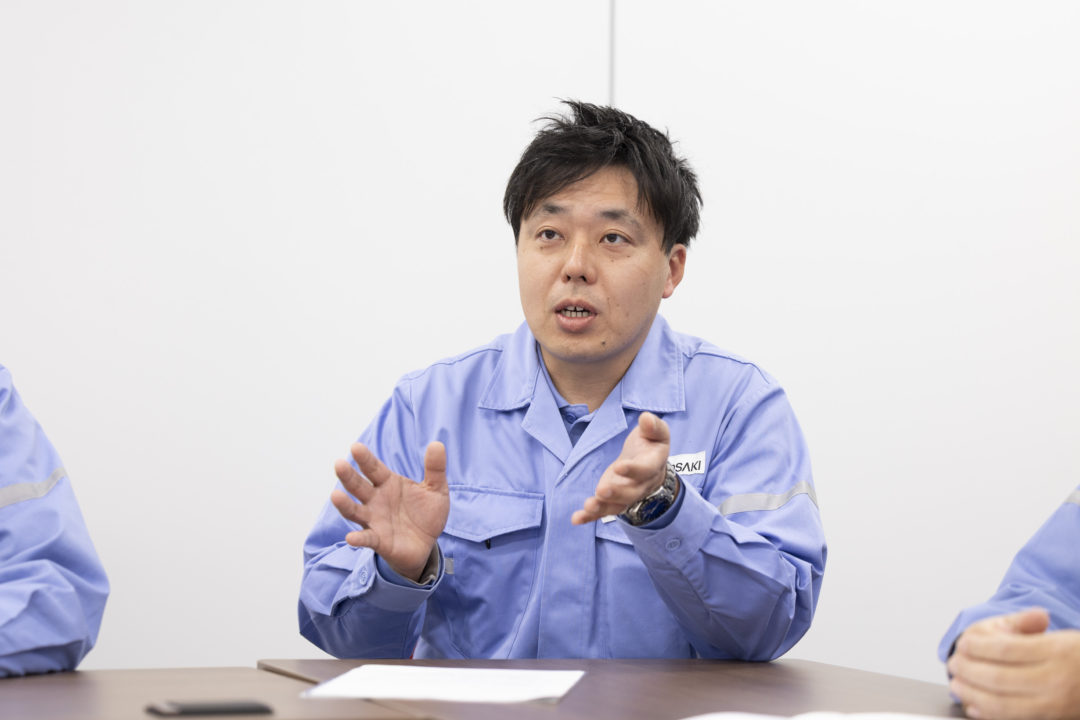
Fukui:
My name is Fukui, and I am in charge of production technology, including equipment installation, in the Production Technology Group of the Thermal Ceramics Department. Our thermal insulation materials are widely used in equipment operating in high-temperature environments, such as in the steel industry as well as industrial furnaces and fuel cells.
When operating such equipment, the important thing is to control heat loss through dissipation and to manage energy costs. A large heat loss requires extra energy, which is undesirable from the perspective of saving energy.
Moreover, the demand for more efficient operation is increasing in order to achieve carbon neutrality.
Of course, heat loss can be limited by increasing the amount of insulation material, but this will result in larger equipment and higher costs. These needs have been growing over the past few years.
Effective insulation while taking up less space & costing less
What are some of the advantages to your customers?
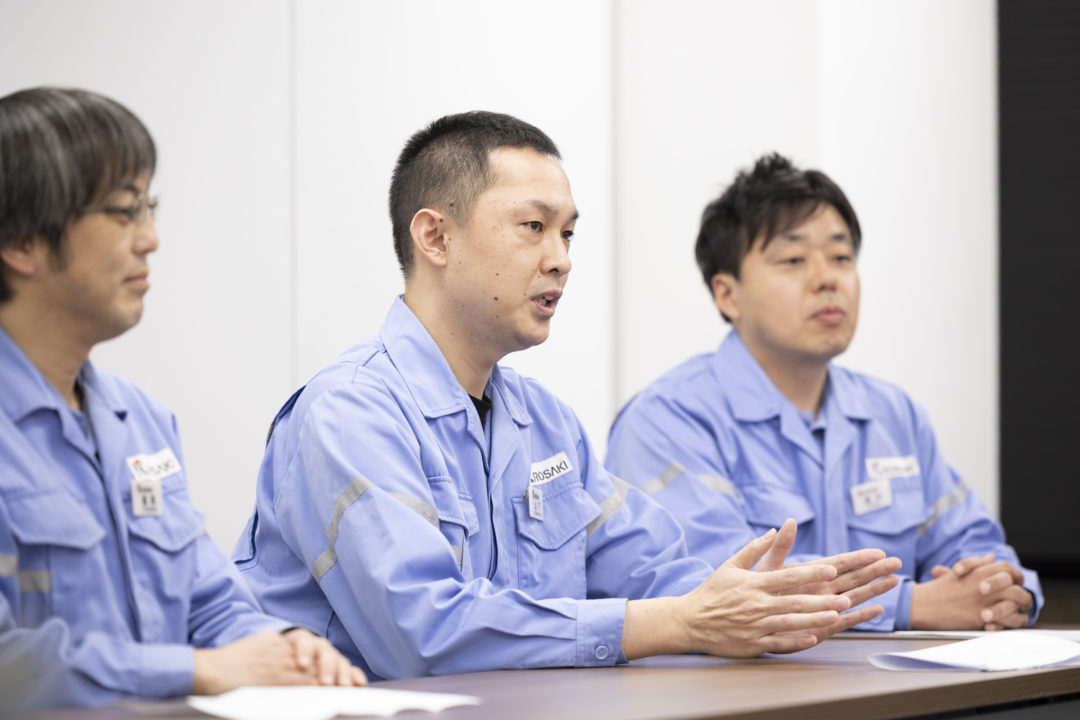
Yamashita:
My name is Yamashita, and I am in charge of material development in the Quality Technology Group of the Thermal Ceramics Department. The product we have developed, KROTECT™, can meet the needs of the customers as Fukui just mentioned. Compared to other thermal insulation materials on the market, KROTECT™ has high thermal insulation performance and can reduce heat loss. Moreover, reducing the thickness of the insulation material itself helps to reduce the size and cost of the entire system.
In the field of fuel cells in particular, high-performance insulation is required. The use of KROTECT™ enables effective insulation in a smaller space, which results in lower energy costs and smaller equipment. As a result, the end-user will also benefit from reduced equipment costs and higher efficiency.
What are the technical features of KROTECT™?
Tsuruga:
My name is Tsuruga, and I am also in charge of material development in the Quality Technology Group of the Thermal Ceramics Department. KROTECT™ is a thermal insulation material with a very low thermal conductivity compared to conventional products. This property was achieved with our unique material development and manufacturing technology. Our specific focus on the physical properties of fumed silica, the main constituent, was the key to the successful development of this material. This material has a large number of microscopic pores that are not visible to the naked eye, but by making them as small as possible and increasing the density of the structure, we were able to achieve both low thermal conductivity and high strength.
We cannot explain the details of the manufacturing technology, but the high performance of KROTECT™ was achieved by examining and optimizing various manufacturing conditions in order to maximize the material’s properties.
Consistent production has been achieved by overcoming a number of challenges, from discovering materials to compounding and start-up of the production line

What were some of the challenges you faced during development and how did you overcome them?
Tsuruga:
Our first task was to screen materials. We obtained a number of sample materials and carefully evaluated their performance one by one. We had originally selected materials with high thermal insulation performance, but we faced an extremely high technical hurdle in finding materials with even better performance from among them. In addition, we also had to proceed with the evaluation quickly within a limited time frame. However, we were able to clear the first hurdle by finding a material that can reduce thermal conductivity by 20% compared to conventional products.
However, customers’ needs vary widely. For example, handling is an important factor. Even if a material has low thermal conductivity, putting it into practical use will be difficult if it is difficult to handle. Therefore, we went back to fundamental aspects, thoroughly considered and studied the mechanisms of low thermal conductivity and high strength, and optimized our formulations based on those results. Moreover, we used materials informatics, an AI technology, to complete KROTECT™ with both low thermal conductivity and high strength.
The process from conception to completion took about 5 years. We have patented some of the technologies that were developed during this process.
Yamashita:
As is the case with many manufacturing processes, we also struggled with the difference between the laboratory scale and actual production scale. The prototypes produced in the lab are small in size, but the actual products are a bit larger. This can lead to differences in performance, and adjustments had to be made to ensure that the quality obtained in the lab was reflected in the actual product.
Did you encounter any difficulties in getting the production line up and running or in achieving consistent production?
Fukui:
To produce KROTECT™ , Krosaki Harima built a new production line. General-purpose equipment could not be used, so Krosaki Harima assembled expertise from both inside and outside of the Company, and equipment was designed to its own specifications through repeated discussions.
The special properties of the raw materials handled were another major challenge. Starting in the basic verification stage, we made repeated attempts to find the optimum elemental technology. We worked closely with equipment manufacturers to complete the production line through countless discussions.
Moreover, unexpected problems occurred after the start of operation, but the whole team shared ideas and solved those problems one by one as we went forward. As a result, we were able to establish a consistent production system.
We will develop technologies that can be used in a wide range of fields to meet the growing need for insulation materials
What environmental considerations are there?
Yamashita:
Insulation is a product directly linked to environmental benefits such as saving energy. Not only does it reduce the amount of thermal energy wasted by dissipation, it also reduces the consumption of electricity needed to compensate for that wasted energy.
In the area of industrial furnaces, we estimate that use of KROTECT can reduce CO2 emissions by 250 tons per year compared to conventional products. KROTECT™ is a product that can help to create the decarbonized society that the world is seeking to usher in.
What are your thoughts on future technological developments?
Morikiyo:
We feel that the need for insulation materials will continue to expand to a wider range of areas. We believe that our products can be used both in the current areas of business in which we are involved as well as in the design of heat generation countermeasures and thermal shielding for precision electronic components including semiconductors.
We will continue to develop technologies that can be used in a wider range of fields by solving problems in various usage environments.
Moreover, we will promote technological development to meet customer needs and further improve product performance. Furthermore, we plan to aggressively expand into new markets.