Dry-Free™
Interview | A challenge that overturns conventional wisdom by eliminating drying process for monolithic refractories.
Dry-Free™
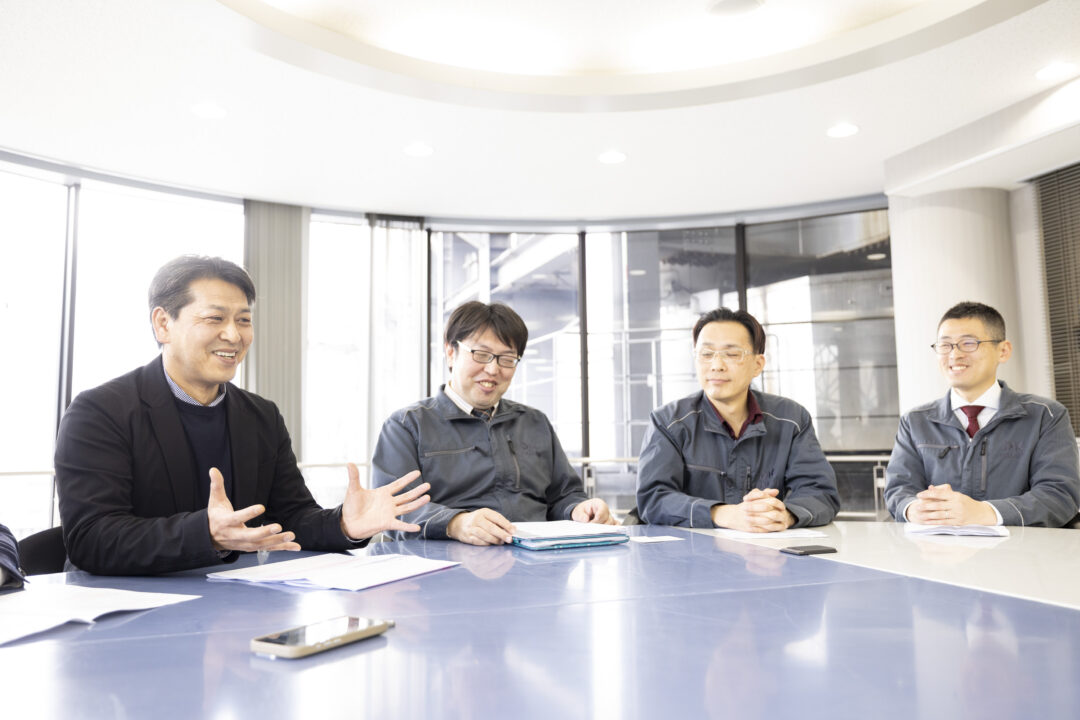
Team Member
- Koga, Manager, Sales Group, Planning & Sales Dept.(Krosaki Harima Corp.)
- Tokutomi, Manager, Steelmaking Monolithic Refractories Group, Monolithic Refractories Technology Dept.(Krosaki Harima Corp.)
- Mr.Nitta, Executive Officer (Daikan Co. Ltd.)
- Mr.Kimoto, Section Chief, Factory Management Department, Facility Maintenance Division (Daikan Co. Ltd.)
- Mr.Ueoka, Chief, Factory Management Department, Facility Maintenance Division (Daikan Co. Ltd.)
Company Overview: Daikan.Co., LTD
Daikan has over 50 years of history in industrial waste treatment and recycling, primarily in the Kinki region. The company operates two incineration facilities in Osaka Prefecture and one crushing facility in Hyōgo Prefecture, holding permits for incineration, sorting, and crushing. They process approximately 130,000 tons of industrial waste each year.
They perform biannual inspections and maintenance on their incinerators, for which Krosaki Harima provides refractory materials and maintenance support.
Today, we spoke with Daikan as a representative user about their experience with Dry‑Free™.
Responding to changing industrial waste with refractories that evolve over time
What was the background behind the development of Dry-Free™?
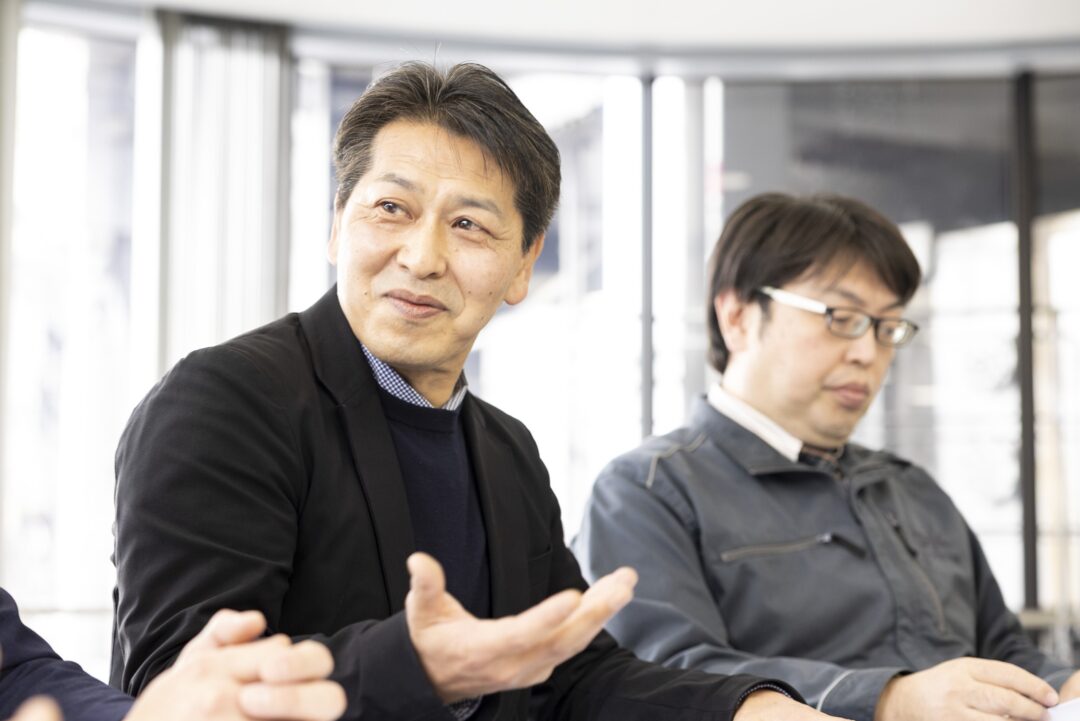
Mr. Kimoto (Daikan Co. Ltd.):
I’m Kimoto, responsible for maintenance at our main plant. First, let me explain the circumstances that led to this development. Refractory materials line most of the interior of an incinerator and are constantly damaged by high temperatures during operation.
Over time, the composition of industrial waste has changed, notably with an increase in waste plastics in recent years. These plastics have very high calorific values, placing additional stress on the refractories.
Under these conditions, refractory wear and degradation have accelerated year by year, making it urgent to revisit refractory specifications and installation methods. We held repeated discussions with Krosaki Harima, who supplies our refractories, and explored a variety of improvement measures, such as changing gunning materials and trialing new methods using refractory blocks.It was through these incremental improvements that Dry‑Free™ was born – not as a sudden innovation, but as the culmination of staged enhancements.
Koga (Krosaki Harima Corp.):
I’m Koga, in charge of development for Dry‑Free™. When I first visited Daikan’s plant and saw the furnace, block‑based drying was already reducing effort to some extent. However, blocks are hard to use in complex geometries, and there remained the risk of blocks falling out during operation, forcing an emergency shutdown.
In that context, Daikan’s team asked us, “Is it possible to create a material that needs no drying at all?” Hearing that was like a bolt from the blue for me as an engineer. Our corporate vision is “to deliver world‑class customer value.” We wondered, “Can we truly eliminate the drying process – a process long regarded as indispensable?” We knew it was a reckless challenge by industry standards, but we owe it to our customers to tackle their problems head‑on. We revisited over a century’s worth of R&D data, iterated through experiments and brainstorming, and succeeded in just one year.
A drying process lasting 90-100 hours becomes unnecessary. An incinerator can be started up in as little as 8 hours
What are the advantages of using Dry-Free™?
Mr. Ueoka (Daikan Co. Ltd.):
I manage plant equipment maintenance, including refractory repair during scheduled shutdowns. The biggest benefit on the ground is that we no longer have to worry about the drying process—so much stress has been lifted. Eliminating the risk of explosive spalling has brought greater safety and peace of mind.
As mentioned earlier, the conventional drying process takes 90 to 100 hours, during which time the temperature inside the furnace must be carefully controlled in increments of several dozen °C. However, use of Dry-Free™, means that the drying process itself is no longer necessary, and the furnace can be started up by raising the temperature enough to perform incineration. As a result, start-up can be accomplished in as little as 8 hours.
Mr. Kimoto (Daikan Co. Ltd.):
The ability to replace previously used materials is one of the main appeals of Dry-Free™. New materials are often limited to specific applications, but Dry-Free™ is a highly flexible and versatile material that works for both casting and gunning.
When precast blocks were used in the past, even the supporting metal fittings had to be changed, which required extensive work within the entire furnace. Now, such a major change in materials is no longer required, and eliminating the drying step also cut out heavy fuel oil consumption yielding substantial cost savings.
Moreover, as Mr. Nobuta mentioned earlier, difficulties such as explosive spalling cause not only technical problems but also substantial psychological damage. If explosive spalling occurs just as the furnace is about to start up in perfect condition once maintenance is complete, it is a devastating both to the installers and to those of us in charge of site management.
Should customers opt to use Dry-Free™, we have confirmed that there is virtually no risk of explosive spalling based on theory and laboratory data as well as actual test results. In that regard, this material can be used with great peace of mind.
Mr. Nitta (Daikan Co. Ltd.):
My name is Nitta, and I am the executive director of the factory department. From a management standpoint, I see great merit in Dry-Free™ in terms of reduced fuel costs. In addition, the waste treatment industry must operate in accordance with the law, and reducing fuel is an important aspect in relation to the Energy Conservation Act (the Act on the Rational Use of Energy) and the Law for Decarbonization to Cope with Global Warming (the Law Concerning the Promotion of Measures to Cope with Global Warming).
In specific terms, about 50 kiloliters of fuel oil was used in the drying past, but the use of Dry-Free™ has allowed that amount to be reduced to about 4 kiloliters – about one‑thirteenth. Since we conduct two shutdowns annually, the energy savings are tremendous year‑round.
Reducing fuel use not only cuts costs but also lowers greenhouse‑gas emissions, further enhancing Dry‑Free™’s value from a managerial standpoint.
Tokutomi (Krosaki Harima Corp.):
I look after monolithic refractory R&D and service. Having our customers recognize the value of our product is the greatest reward for us as a manufacturer.
Daikan’s endorsement shows that Dry‑Free™ excels not only in performance but also supports carbon‑neutral initiatives. We are proud to contribute to both customer success and global environmental goals.
We view Daikan’s case as a flagship example and plan to promote Dry‑Free™’s benefits domestically and overseas, helping more users achieve carbon‑neutral operations.
From four days of idling to less than one day
Among these advantages, which do you consider the greatest?
Mr. Ueoka (Daikan Co. Ltd.):
One of the biggest advantages is that “gunning repair” can be performed even in high-temperature environments. With conventional gunning materials, if a problem occurred because a refractory fell off, the temperature inside the furnace had to be completely lowered before repair work could be started. Therefore, the process took at least 4 days until the furnace resumed operation.
With Dry‑Free™ gunning material, we can repair at around 200℃, eliminating both cool‑down and re‑heat times. In one recent case, just before a scheduled upgrade, part of the lining began to spall. Using Dry‑Free™, we restored normal operations in about 21 hours, which is well under a day & without shutting down the furnace.
Moreover, we plan to extend the life of existing refractories by capitalizing on the ability to perform installation in a short amount of time and by methodically performing gunning repair outside of regular maintenance work.
Thus, Dry-Free™ is an excellent material in that it allows a prompt response in the event of a problem and it expands options for repair plans.
Switching the binding material based on amassed R&D data
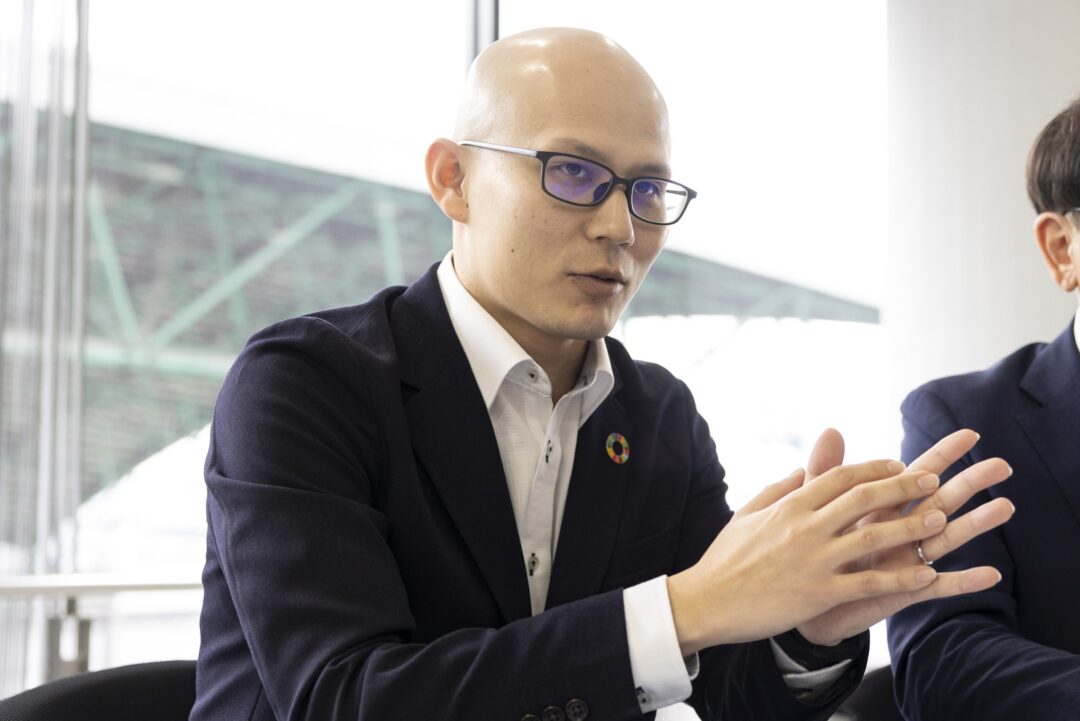
Could you describe some of the technical characteristics and properties that made drying unnecessary?
Koga (Krosaki Harima Corp.):
We are delighted to have received Daikan’s valuable feedback.
The most important factor in eliminating the need for drying was reconsideration of alumina cement, which is a binding material that has commonly been used for over 100 years. When alumina cement is mixed with water, “mineral hydrates” are formed. These fill the pores and make the material denser, making it less prone to dry.
Leveraging our vast data, we worked on development that involved switching to a “non-cement” binder. We have succeeded in improving the air permeability by 100 to 1,000 – fold compared to conventional materials by developing a monolithic refractory using a new binder that is not alumina cement. This makes dehydration easy and eliminates the need for a drying process.
Another major advantage of the new binding material is that it allows gunning repair even in high-temperature environments, as Mr.Ueoka mentioned. While alumina cement has high strength, it lacks adhesive strength, but the new binding agent displays excellent adhesion and bonding properties even under high temperatures, helping to prolong the life of refractories.
Tokutomi (Krosaki Harima Corp.):
We are sometimes asked if the 1000 – fold increase in air permeability will allow slag (ash produced in an incinerator that has been melted at high temperatures) adhering to the surface of refractories to penetrate more easily.
However, Dry-Free™ is not a material with coarse pores like a sponge, but a material with fine pores that can only be seen at the microscopic level. Therefore, even if slag adheres to the material, it will not immediately penetrate the material.
In addition, the Dry-Free™ material that is being used by Daikan is designed to chemically block slag components (calcium oxide, sodium oxide, potassium oxide, etc.) that are typically found in an incinerator. Analysis of refractories in actual use has also indicated that penetration by slag is limited to a few millimeters on the surface and that it does not seriously affect the interior of the refractory.
An attentive approach to issues and sincerely working to address them
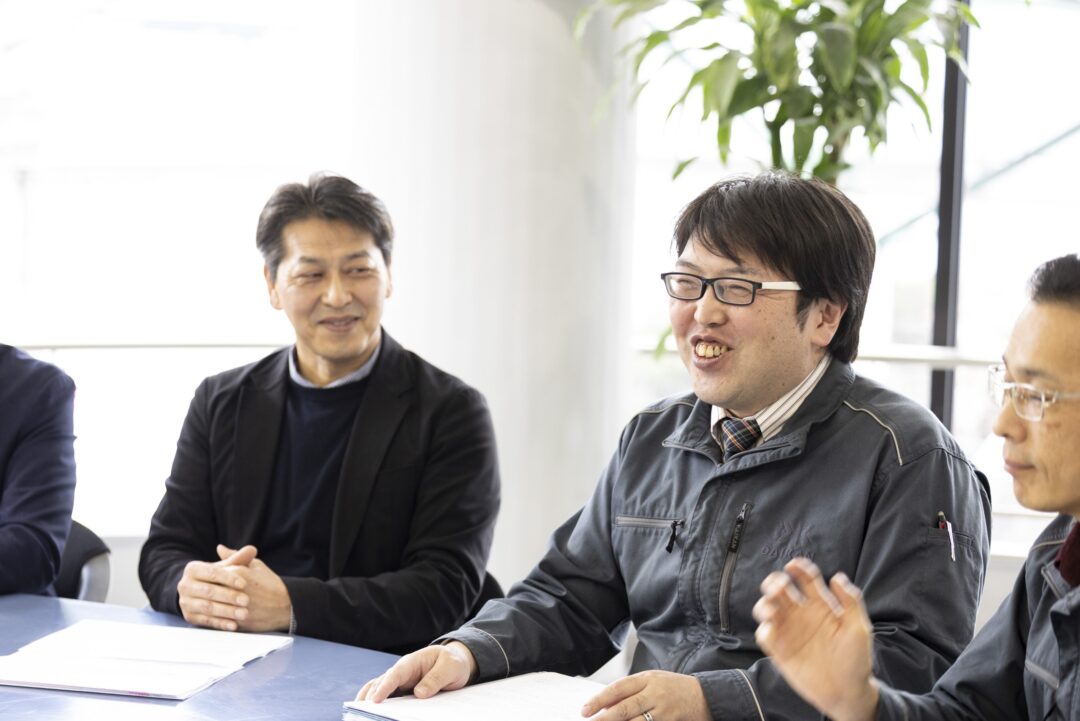
Daikan has been using Krosaki Harima’s products and services for more than 10 years. What lead you to choose Krosaki Harima?
Mr. Ueoka (Daikan Co. Ltd.):
Indeed, our partnership with Krosaki Harima Corp. spans more than ten years. One of the main reasons why we trust Krosaki Harima as a business partner is that they have always been very attentive to our issues and they have sincerely worked to address them.
For example, when we had the problem of explosive spalling as I mentioned earlier, Krosaki Harima worked with us to address the issue and actively suggested solutions such as reviewing the drying process and introducing new refractories.
In addition, the calorific content of incinerated materials has been increasing over the past few years, increasing the load on incinerators. In response to new issues like these, Krosaki Harima has responded adeptly and with an eye to the future, suggesting emergency repairs on-site if there is unexpected wear on refractories during regular maintenance and suggesting the introduction of new materials. This support has led to our strong trust in Krosaki Harima.
Maintaining stable, eco‑friendly operations amid harsher operating conditions will require refractories to adapt continually. We look forward to continuing to collaborate with Krosaki Harima’s technical experts to meet future challenges.
Developing technologies that will further enhance durability and enable our products to cope with harsher environments
What are your visions for the future development and deployment of Dry‑Free™?
Mr. Nitta (Daikan Co. Ltd.):
The industrial‑waste sector is highly sensitive to social changes and regulatory reforms. At first glance we may appear to be handling the same type of waste, but we are in fact treating different types of waste on a daily basis, and the nature of that waste is changing over time.
Our main factory is located in the center of town and about two years ago we began reevaluating incineration methods to address local environmental concerns. Within this context, we are very encouraged by the wide range of refractories that Krosaki Harima has suggested to flexibly respond to the changing times. We hope that Krosaki Harima will continue to draw on its advanced technological capabilities to offer us a variety of suggestions.
Stable operation is extremely important to us, and a shutdown of the incinerator for even 1 day could result in a loss of tens of millions of yen. To mitigate such risks, we look forward to further durability improvements and timely maintenance proposals as partners.
Koga (Krosaki Harima Corp.):
We believe Dry‑Free™ is not merely a new material but a potential industry game‑changer. Dry-Free™ can be used under harsh operating conditions such as those at Daikan, and we are working to expand the use of Dry-Free™ to many other incinerators.
As carbon neutrality and the SDGs become central societal themes, Dry‑Free™’s value is gaining recognition. Adopting it helps reduce environmental impact and contributes to a sustainable society.
Moving forward, we will enhance its durability for even harsher conditions, expand market deployment, and strive to protect the global environment as an essential partner to our customers both in Japan and around the world.