


2026/10/01
Refractory Bricks and Cakes
Introduction
What do you think bricks and cakes have in common?
Bricks are hard and certainly not something you can eat, while cakes are soft, fluffy, and delicious.
At first glance, they may seem completely different, but they actually have something in common.
In this article, we will uncover some of the secrets behind how refractory bricks are made by comparing the process with cake making.
Bricks and Cakes
First, let us think about the process of making a cake.
- Prepare the ingredients and weigh out the required amounts.
- Make the batter by mixing the ingredients.
- Shape the batter.
- Bake it, or chill it depending on the type of cake.
Broadly speaking, the process can be divided into these four steps.
Next, let us look at the process of making refractory bricks.
- Prepare and weigh the raw materials: Raw Material Weighing
- Make the mixture: Mixing
- Create the required shape: Forming
- Heat the shaped product: Firing
💡The process of making refractory bricks is remarkably similar to the process of making a cake. We have found our first similarity!
The baking temperature must also be carefully controlled according to the type of cake being made.
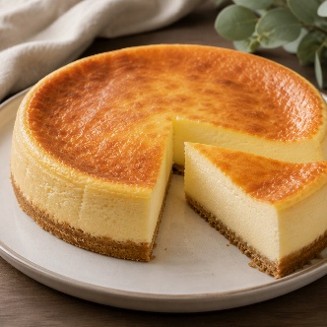
140°C to 160°C: Soufflé Cheesecake
150°C to 170°C: New York Cheesecake
160°C to 180°C: Baked Cheesecake
For example, a soufflé cheesecake needs to be baked at a temperature between 140°C and 160°C.
Baking a cheesecake requires precise temperature control.
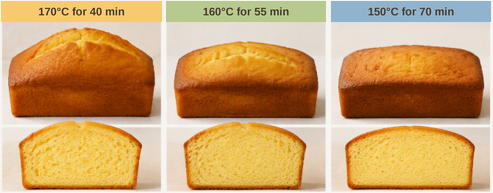
The baking temperature can also significantly affect the texture and mouthfeel of a cake. Let us take pound cake as an example.
When baked at 170°C for 40 minutes, it becomes light and fluffy. When baked at 160°C for 55 minutes, it becomes moist and rich.
170°C for 40 minutes: Light and fluffy
160°C for 55 minutes: Moist and rich
150°C for 70 minutes: A fine, delicate texture with a deeper, well-developed flavor
As these examples show, even when the same ingredients are used, small changes in baking temperature and time can alter the cake’s texture and mouthfeel.
This shows us that the baking temperature is an important factor in cake making.
The same applies to refractory bricks. Some are fired at temperatures exceeding 1,000°C, while others are manufactured without firing.
💡In other words, how the product is “baked” is important. We have found another similarity!
Of course, different refractory bricks use different raw materials and must meet different quality and performance requirements. The firing temperature is therefore carefully adjusted to manufacture refractory bricks that meet each customer’s specific needs.
The Value of Unfired Bricks
Cakes need to be baked, but some refractory bricks are manufactured without firing.
The most important feature of unfired bricks is that they are environmentally friendly.
Conventional fired bricks are fired at temperatures exceeding 1,000°C, and this process inevitably generates carbon dioxide emissions.
Unfired bricks, however, can significantly reduce the amount of carbon dioxide generated during manufacturing. This makes them a more environmentally friendly type of refractory brick.
Krosaki Harima’s environmental brand, K-GenesisX™, introduces a range of environmentally conscious products.
Among these products, TOUGHMAX™ and MAGreenX™ are unfired refractory bricks.
Environmental changes, including global warming, are continuing to progress and are having a significant impact on our daily lives.
That is why developing environmentally conscious products is essential to protecting the Earth and our way of life for future generations.