


2026/09/01
Technology That Keeps Heat Where It Belongs Supports a Decarbonized Society (The KROTECT™ Story Part 1)
What Is KROTECT™ Nanoporous Insulation Material?
When you hear the term “insulation material,” you may first think of the materials used in the walls and ceilings of homes.
However, insulation materials also play an essential role in factories that manufacture products used in our daily lives, as well as in energy-related equipment.
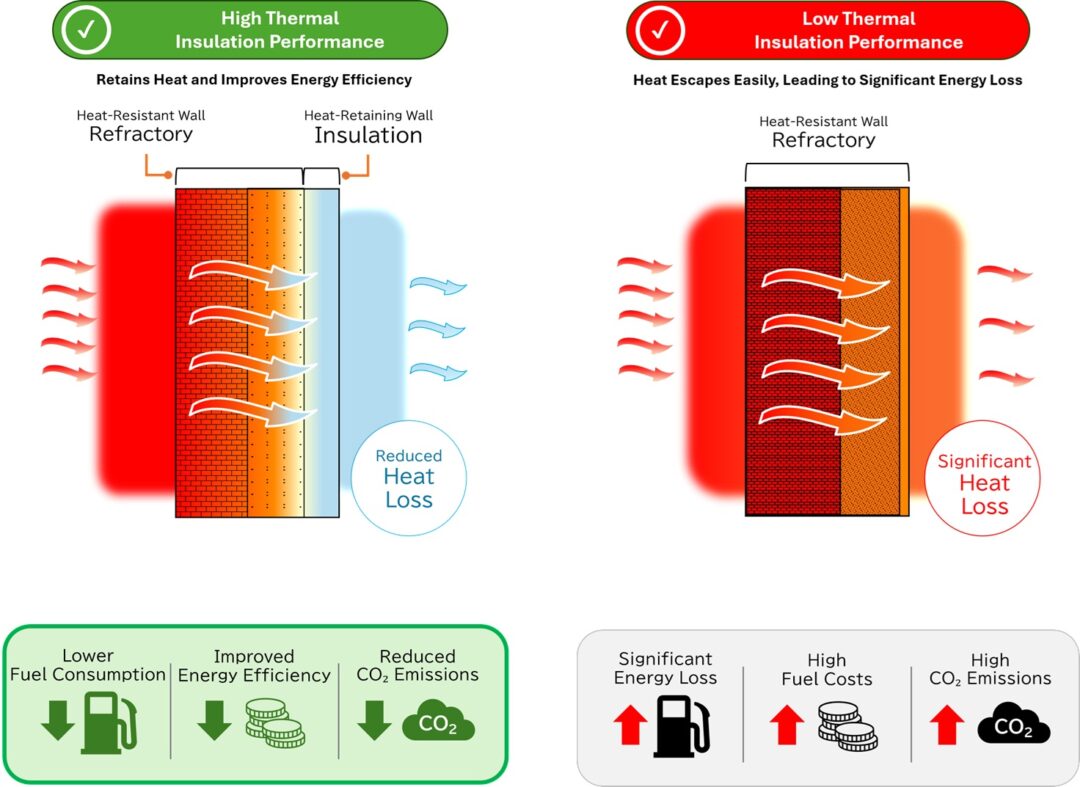
In equipment operating at high temperatures, heat escaping to the outside represents a loss of energy. Minimizing this heat loss is therefore key to conserving energy and reducing CO₂ emissions.
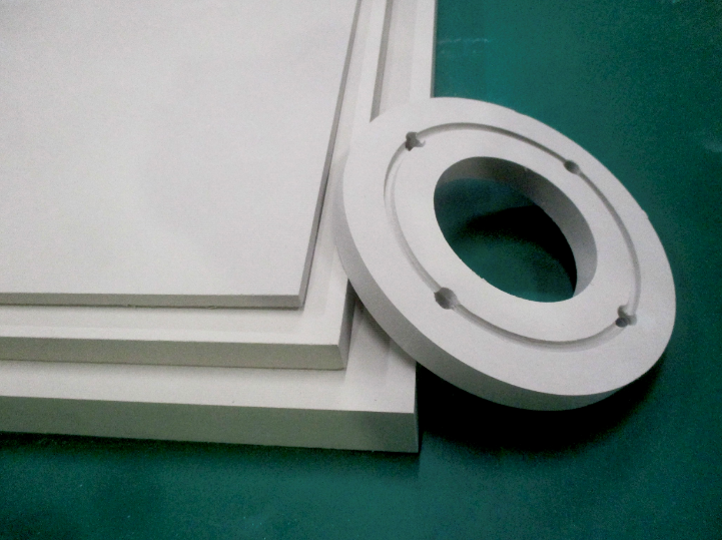
KROTECT™, developed by Krosaki Harima, is a nanoporous insulation material designed to address this challenge.
What Is an Insulation Material?
As its name suggests, an insulation material is a material that makes it difficult for heat to pass through.
For example, hot tea can stay warm for a long time when kept in a vacuum flask. This is because the flask is insulated to prevent heat from escaping to the outside.
The same principle applies to factories and industrial equipment. When heat escapes from equipment operating at high temperatures, it can lead to:
- Energy waste
- Increased fuel consumption
- Higher CO₂ emissions
For this reason, insulation materials are essential for reducing heat loss and improving the energy efficiency of high-temperature equipment.
What Is KROTECT™?
KROTECT™ is an insulation material with thermal conductivity even lower than that of still air, giving it excellent thermal insulation performance.
It is used in heat treatment equipment and industrial furnaces, as well as in household fuel cells such as ENE-FARM systems.
The key advantage of KROTECT™ is that its outstanding insulation performance can be achieved with less material thickness than conventional insulation materials. This enables KROTECT™ to deliver high thermal insulation performance even where installation space is limited.
Benefits of Low Thermal Conductivity
1. Energy Conservation
KROTECT™ reduces the amount of heat released to the outside from equipment.
Because less energy is required to maintain the same operating temperature, KROTECT™ can help reduce energy consumption by minimizing heat loss.
2. Equipment Miniaturization
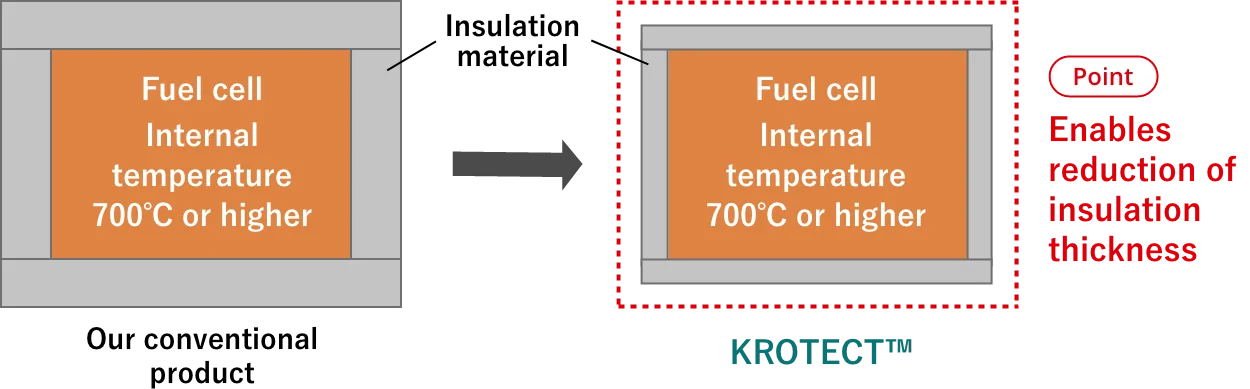
In general, improving thermal insulation performance requires a thicker layer of insulation.
However, because KROTECT™ provides excellent thermal insulation performance, it can achieve insulation performance equivalent to or greater than that of conventional materials with a reduced thickness.
This provides several benefits:
- Smaller equipment and systems
- Lower equipment weight
- Greater flexibility in installation locations
- Reduced costs
These advantages are particularly important for fuel cell applications. By providing high thermal insulation performance within a limited space, KROTECT™ contributes to the miniaturization of the overall fuel cell system.
More Than a High-Performance Insulation Material
The value of KROTECT™ goes beyond simply being a high-performance insulation material.
In industrial furnaces, refractories protect equipment from extremely high temperatures, while insulation materials prevent heat from escaping. By combining the two effectively, furnaces can achieve higher levels of energy efficiency.
KROTECT™ plays an important role in this integrated thermal management system.
In the next article in our KROTECT™ series, we will introduce the technologies behind KROTECT™ that only Krosaki Harima, with its extensive expertise as a refractory manufacturer, could develop. We will also explain how KROTECT™ contributes to the transition toward a decarbonized society.