


THINREX™
Interview | Flat-Shaped Submerged Entry Nozzle Developed from the Ground Up: Delivering Quality and Productivity in Thin Slab Continuous Casting Worldwide
THINREX™
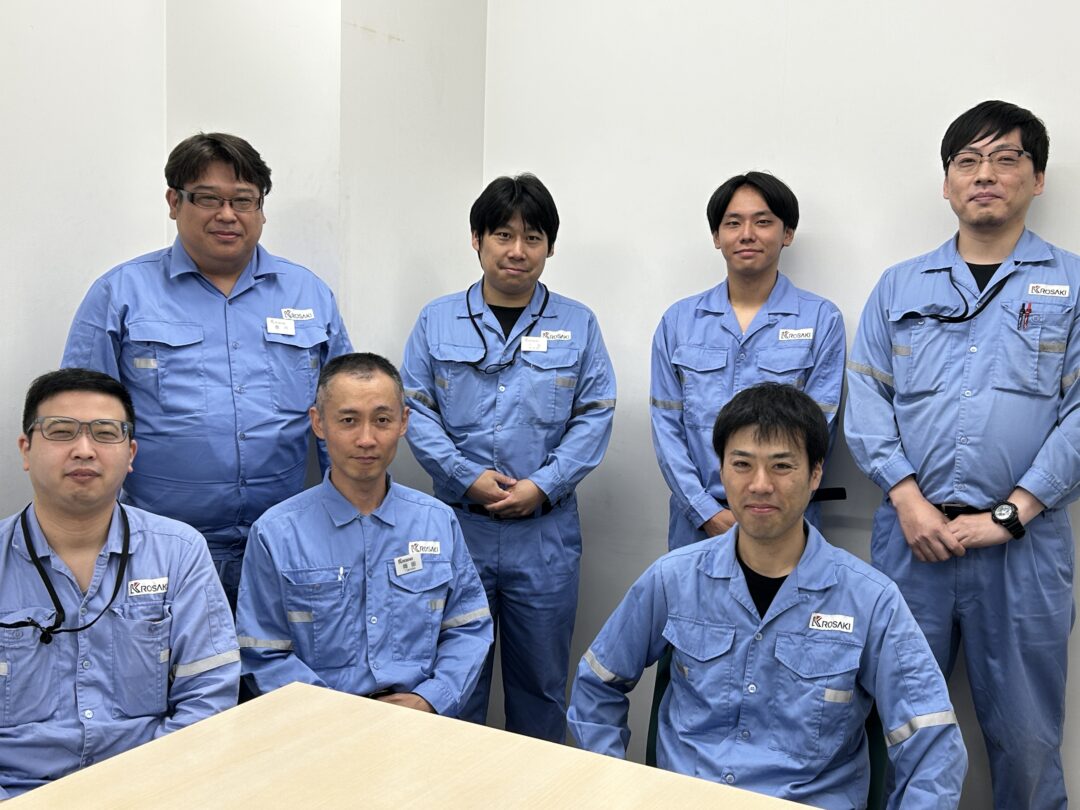
Team Member
- Okada, Manager, Flow Control Refractories Division
- Shingu, Staff, Flow Control Refractories Division
- Katsuki, Group Manager, Technical Service Group
- Hoshino, Manager, Technical Service Group
- Koide, Manager, Technical Service Group
- Takahashi, Assistant Manager, Technical Service Group
- Furukawa, Staff, Technical Service Group
- Oki, Manager, International Sales Department
- Narang, Manager, International Sales Department
- Kuroda, General Manager, International Sales Department
Taking on the Challenge of Thin Slab Continuous Casting, Which Integrates Two Processes into One
Could you tell us about the background behind the development of THINREX™?
Katsuki:
The production process for flat steel products used in automobiles and home appliances generally consists of two steps: continuous casting and hot rolling.
In the conventional process, continuous casting first produces a steel slab approximately 200 to 300 mm thick, which is then reheated and rolled to the desired thickness in a hot rolling mill.
By contrast, thin slab continuous casting produces a thinner slab of approximately 50 to 90 mm directly at the casting stage, thereby enabling a more compact and efficient production process.
This technology is used in compact integrated steelmaking processes known as mini-mills, where smaller equipment configurations can significantly reduce capital investment, CO₂ emissions, and energy consumption.
In recent years, its application has been expanding among electric arc furnace steelmakers in developed countries as well as both blast furnace and electric arc furnace steelmakers in emerging markets.
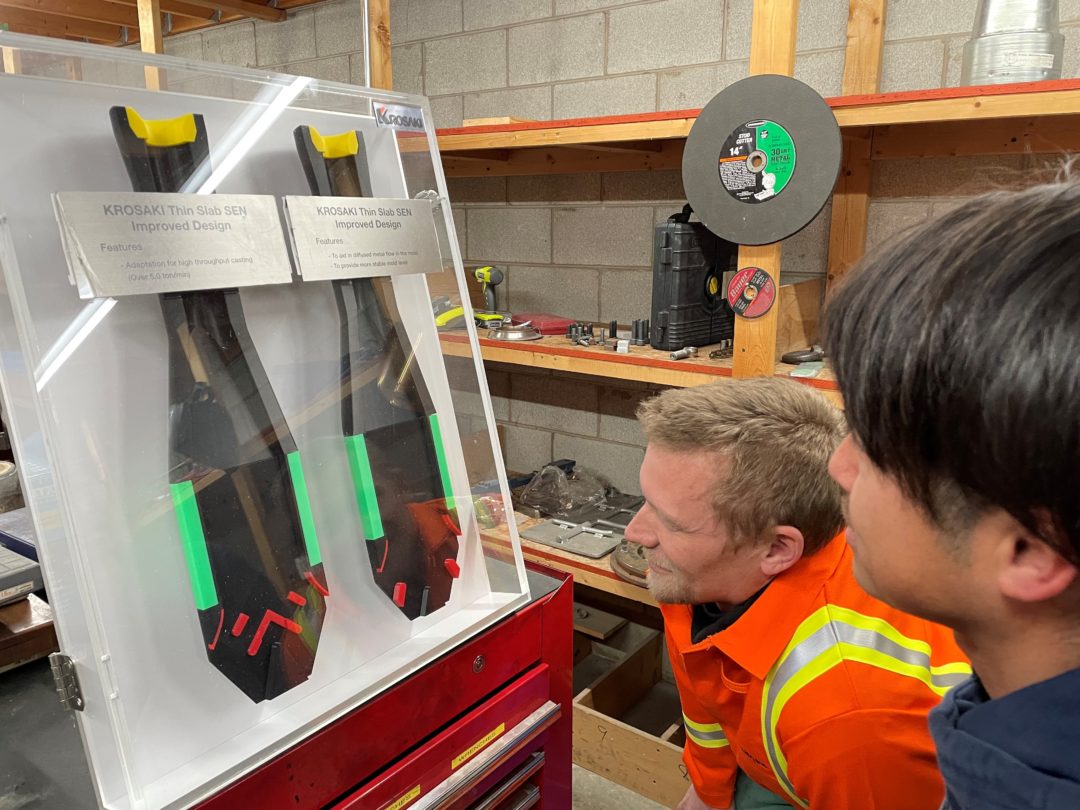
One of the most distinctive features of thin slab continuous casting machines is the funnel mold, a funnel-shaped mold used to cast thin slabs.
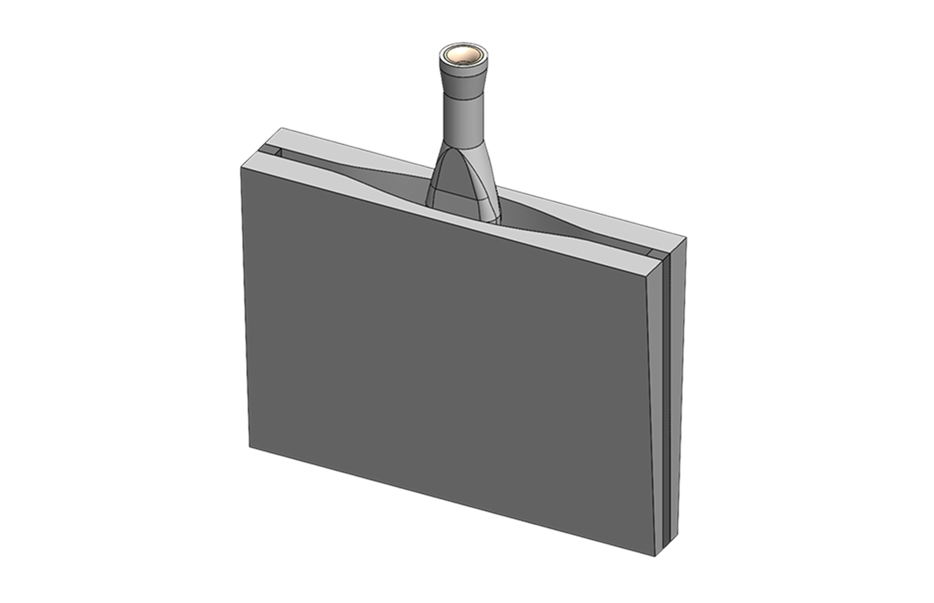
The mold widens toward the top, and the submerged entry nozzle, a tubular refractory component that pours molten steel into the mold, must be optimized into a flat shape so that molten steel can be distributed properly throughout the widened section.
What are the technical features of THINREX™?
Hoshino:
One of the major features of THINREX™ is its high durability.
The service life of a submerged entry nozzle is generally determined by the life of the zirconia graphite material that comes into contact with the mold powder used for lubrication and protection.
In THINREX™, this zirconia graphite material can be arranged in a thicker layer than in conventional products, allowing the nozzle as a whole to be used for a longer period.
In addition to durability, THINREX™ also offers excellent flow performance in delivering molten steel. A key strength is its ability to achieve uniform and stable molten steel flow. Stable flow inside the mold enables high-speed casting of high-quality steel.
This ability to improve both productivity and quality represents the core value of THINREX™. We believe it can make a significant contribution to helping customers achieve both operational efficiency and quality improvement at their production operations.
From Zero to Shape: Using CFD, Water Models, and 3D Printing Under Tight Development Deadlines

What were the major challenges during development?
Okada:
CFD, or computational fluid dynamics, is a method used to calculate fluid flow on a computer. The higher the required accuracy, the longer the calculation takes. Under tight development deadlines, it was challenging to compare a large number of possible shapes.
To balance calculation accuracy with the number of cases to be evaluated, we compared CFD results with water model testing and carefully considered which flow characteristics should be prioritized. We also devised ways to divide the calculations and repeated them many times.
At that time, our computers were not well suited for CFD analysis. We therefore introduced a CPU with many processing cores, which dramatically accelerated the calculations. I still remember how pleased I was to see the simulations progress so quickly.
However, the heat and noise were tremendous. I developed THINREX™ with that roaring machine next to me as my partner. The THINREX™ design was born from this accumulation of trial and error.
How did full-scale water model testing contribute to the development?
Furukawa:
At the beginning of development, we did not have an existing design for either the discharge ports or the nozzle body itself. We truly started from zero.
In the water model tests, we verified the designs identified through CFD analysis, adjusted the shape of the discharge ports, and searched for the optimal molten steel flow pattern. Because thin slab continuous casting machines have very high flow velocities inside the mold and the meniscus is prone to fluctuation, establishing a design capable of controlling molten steel flow stably required a great deal of time.
The introduction of 3D printing significantly accelerated prototyping and verification, allowing the development process to move forward rapidly. By repeatedly cross-checking our results with Okada’s CFD analysis, we were able to accelerate the development of THINREX™.
Achieving Customer-Specific Optimization with a Proprietary Flow-Straightening Structure
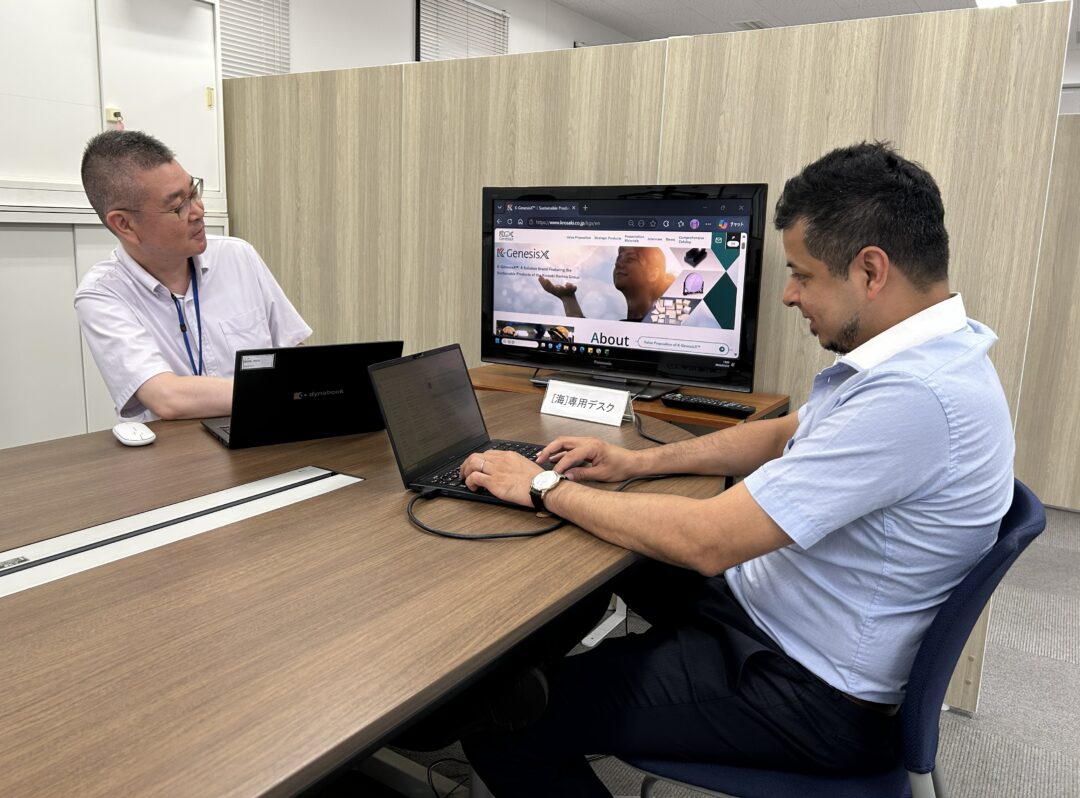
What specific benefits does THINREX™ provide to customers?
Koide:
THINREX™ provides two major benefits to customers.
The first is stable casting quality. Although the term “thin slab continuous casting” may sound like a single process, mold shapes, casting speeds, and other conditions differ from customer to customer. In reality, it is difficult to accommodate all these conditions with a single conventional nozzle shape.
To address this challenge, we use CFD analysis and water model testing to develop an optimized shape that incorporates our proprietary flow-straightening structure inside the submerged entry nozzle. This structure enables uniform molten steel flow under a wide range of customer operating conditions, contributing to improved steel quality and stable casting.
The second benefit is the ability to achieve both longer service life and optimized cost.
THINREX™ allows the zirconia graphite section, which has a major impact on nozzle life, to be designed with greater thickness than in conventional products. Because there is a high degree of freedom in thickness and length, we can propose the optimal design according to each customer’s operating requirements, whether the priority is durability, cost, or both.
How is THINREX™ different from general-purpose products?
Takahashi:
THINREX™ differs significantly in shape from commonly used general-purpose products.
The clearance between the mold and the submerged entry nozzle affects both operational ease and steel quality. A major difference between THINREX™ and general-purpose products is that THINREX™ can maintain this clearance at a constant level during operation.
Furthermore, while maintaining constant clearance, THINREX™ can suppress discharge flow to a level equal to or better than that of general-purpose products. In addition, by arranging the zirconia graphite material more thickly, THINREX™ offers advantages in overall nozzle performance, service life, customer operability, and steel quality.
Solving Challenges in Quality, Productivity, and Safety Leads to Energy Reduction
How does THINREX™ contribute to the environment?
Shingu:
By applying THINREX™ to customers’ thin slab continuous casting machines, we can help solve challenges related to steel quality, productivity, and safety. More efficient steel production reduces the energy required for manufacturing, which also contributes to the reduction of CO₂ emissions.
Could you explain the process for customers to adopt THINREX™?
Oki:
THINREX™ can be finely customized according to customer needs.
First, we assess the customer’s operating environment and conduct simulations and other evaluations. Based on the results, we propose the optimal product specifications.
After that, customers adopt the product on a trial basis before moving to full-scale implementation. Even after adoption, we conduct regular on-site assessments based on data provided by the customer and offer technical advice as needed.
Evaluation by Tata Steel in India: Contributing to Lower Inclusion Defect Risk and Higher Productivity
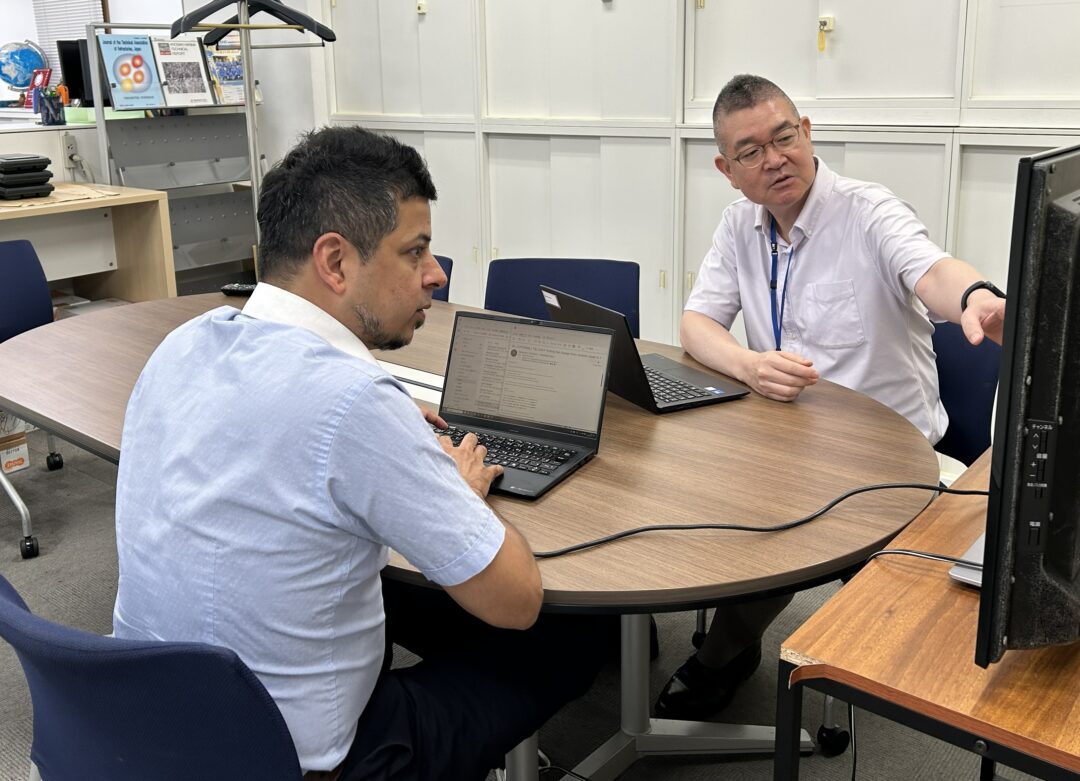
What feedback have you received from customers using THINREX™?
Narang:
Through its optimized nozzle shape, THINREX™ stabilizes molten steel flow inside the mold and suppresses flow fluctuations, thereby helping improve the quality of steel products.
Customers have commented that the flow has become more stable and quality variation has been reduced.
At Tata Steel, which produces high-quality steel grades, THINREX™ has contributed to reducing the risk of defects caused by undesirable inclusions and to achieving more uniform solidification. As a result, THINREX™ is now used not only in Japan but also in countries around the world. At Tata Steel, one of India’s leading steelmakers, THINREX™ is regarded as an important enabling technology that contributes to improved productivity.
Expanding THINREX™ to Thin Slab Continuous Casting Machines Worldwide, Guided by Our Corporate Philosophy
What are your plans for future market development?
Kuroda:
THINREX™ has already received strong recognition from customers in Japan and overseas who place importance on achieving both quality and productivity. We will continue to promote THINREX™ further with the aim of expanding its adoption.
Under the Krosaki Harima Group’s corporate philosophy, “Mastering heat, empowering industries, and creating a brighter future,” we will continue to propose optimal products while carefully addressing the needs of each customer. By leveraging our strengths in technology and problem-solving, and by sincerely engaging with customers to resolve their challenges, we aim to remain a company that contributes to both our customers and society.
What is the future direction of technical development?
Katsuki:
For THINREX™, we are continuing research and development on new shapes and materials. Our goal is to provide optimal thin slab submerged entry nozzle designs that meet a wide range of customer needs. We will continue to pursue outstanding technological capabilities and problem-solving expertise, aiming to remain a global leader chosen by customers around the world.